15 Bunk Single Beds Benefits Everyone Should Be Able To


Bunk Single Beds
Bunk beds make a big difference in children's rooms. They can assist in keeping their space clean, tidy and organized by providing them with a place to store books, toys as well as other items.
However, they could also create a noisy and less private-feeling room. It is possible to overcome this by selecting furniture that offers design flexibility.
Size
Bunk beds are a space-saving way to accommodate more than one person in one room. However, choosing bunk bed and single bed is essential for security and comfort. To avoid mobility issues the bed's dimensions should be in line with the room's size and ceiling height. The side rails of the bunk bed must be high enough to hold mattresses and should be firmly fixed on the frame.
Bunk single beds are typically smaller than standard single bed sizes, however, they are still suitable for adults to use. This allows you to choose a mattress that is the right thickness for your body type and sleeping requirements. A mattress with a thinner thickness is often preferred by younger kids on the top bunk since it is simpler to get in and out of.
There are a variety of options for the dimensions of the mattresses on a bunkbed, such as twin over futon and twin over full. Both of these configurations are perfect for parents who have children of different age groups. Twin over full bunk beds have a standard queen-sized mattress on the top and a full-size mattress on the bottom. This is a popular choice for families with kids that are of similar ages and heights. Futon bunks are another option that comes with a standard top bunk and the lower futon which can be rearranged to serve as a bed or couch.
You also have the option of an XL full-size mattress on a bunk bed that is 5 inches larger than traditional full mattresses. These mattresses are great for teenagers and taller adult single sleepers.
For healthcare facilities that frequently change the demographics of their patients the bunk single beds are a great solution to accommodate different demands for sleep. It is important that you regularly check and maintain your single and bunk beds to ensure they are in compliance with the highest standards of safety and comfort.
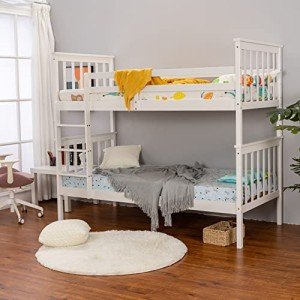
Bunk beds are a great option for healthcare facilities who need to maximize space in an area that is small. They are durable, and offer a an excellent value since you can save space by removing the need for extra furniture. In addition, bunk beds can be a great way to encourage cooperation between your staff members and patients. This will increase patient satisfaction and improve outcomes.
Style
It's important to think about the design of your bunk bed or single bed, in addition to the dimensions. Metal bunk beds, for example, are great choices for homes that want to create a residential look while maintaining durability and strength. They are also less messy than single sofa beds.
Single beds are better suited for rehabilitation and long-term health facilities that have stable and long-term patient populations. Although they are less expensive than bunk beds, they offer the same level of security and comfort and minimize danger of falling from the top bunk.
Another benefit of single beds is that they're usually more streamlined than bunk beds. It can be difficult enough to dress a twin bed when it's laying on the ground, but trying to fit one while hanging off a ladder is a completely new element of difficulty! Bunk beds require a certain degree of agility to climb and can be difficult for young children or those who have limited mobility.
Single beds can be dressed with a variety of options. This gives the facility manager greater flexibility and lets them create a more personalized space for guests. They can be paired with furniture to make the room more inviting and comfortable. A bunk bed, for example can be paired with a desk or a daybed to make the most of the space.
It is ultimately up to each facility manager to decide which type of bed configuration is the most suitable for their specific needs and population. Take into consideration the most important aspects for your company in order to make the best decision and find the ideal fit for your patients.
To ensure that your beds are safe and functional, you should regularly inspect and maintain your bed. This will minimize liability risks and extend their lives. The Journal of Facility Management notes that regular maintenance can reduce repair costs by 20 percent. Single beds and bunk beds are both excellent choices for furnishing facilities for behavioral health However, it is important to evaluate each option against your specific patient characteristics and room sizes to determine which will be most suitable for your program.
Safety
Bunk single beds are a great option for a child’s bedroom or a mental health facility. They can maximize space and add more storage, however, they also pose security issues when it comes to the height. Bunk beds require an elevated ladder to access the upper bed. Children might be enticed by the ladder or to climb it. To ensure that everyone is safe, it's important to teach your children to use the ladder safely and make sure it's always secure.
Guard rails are a crucial safety feature for bunk single beds. They stop falling. They should be placed at least 16cm over the surface of the bed and their gaps should not be more than 7.5cm. There's plenty of details on how to install your guard rails, and also ensure that they're meeting safety standards by examining the manufacturer's guidelines.
Bunk bed safety is also dependent on the right bedding. Only use mattresses that meet safety standards and fit snugly on the frame. It is also recommended to regularly clean the mattress and its support system in order to reduce the risk of injury and entrapment.
Ladders and stairs should be a sturdy option to access the top bunk. They should be firmly installed to prevent accidents. They should be placed at an angle that blocks children from climbing over or under guardrails. Handrails must also be able to be gripped easily. Toys and other items should be cleared away so that children are not inclined to climb over them.
Finally, you must be aware of the cleaning challenges that bunk beds can cause and implement regular sanitation protocols to ensure hygiene is maintained at a high level. According to a study published in Infection Control Today the bunk beds could require 20% more cleaning time than single beds. By following these guidelines to reduce the risk of bunk beds and ensure your patients are in the most comfortable and pleasant environment.
Convenience
Bunk single beds are a great option for facility managers looking to maximize space, increase the safety of patients and provide peace of mind. They come in a variety of sizes to accommodate different types of patients. Their simple design makes them simple for facility managers to maintain and clean.
Safety Increased: Single beds have a greater stability than bunk beds and need less structural components. This decreases the chance of falling, which is a significant concern in healthcare facilities. Their simple and low profile also make them easier to reach for personnel, reducing the risk of injuries.
In a variety of healthcare and human services environments where floor space is limited, it is critical to maximize vertical space. Bunk beds can enable facilities to accommodate a larger number of occupants within the same space. This can lead to cost-savings. This is particularly useful for small or high-density buildings or spaces with limited floor space.
The beds are designed to offer the most flexibility in a room, since they can be divided into two separate single beds when a child is old enough or no longer requires sharing a room. They're ideal for families anticipating changes in their children's sleeping habits over time, and can help reduce clutter and provide more storage space.
The lower platform can be turned into a futon during the day, which makes the most of space in a bedroom or apartment. Additionally, some frames are configured in an L-shape so that the lower bed can serve as a couch, while mattresses rest on top, providing more flexibility and convenience. Bunk beds can also be fitted with integrated storage options to ensure the room remains neat and tidy. Bunk single beds tend to be more expensive than standard single beds, but they're cost-efficient in the long run due to lower maintenance costs and longer durations. They're also simple to put together and disassemble, which allows for quick moving and changing rooms. This is crucial for facilities that need to organize rooms regularly to meet changes in patient demographics or clinical needs. The beds are easy to clean and sanitize, which makes it easier to maintain efficient infection control practices.